
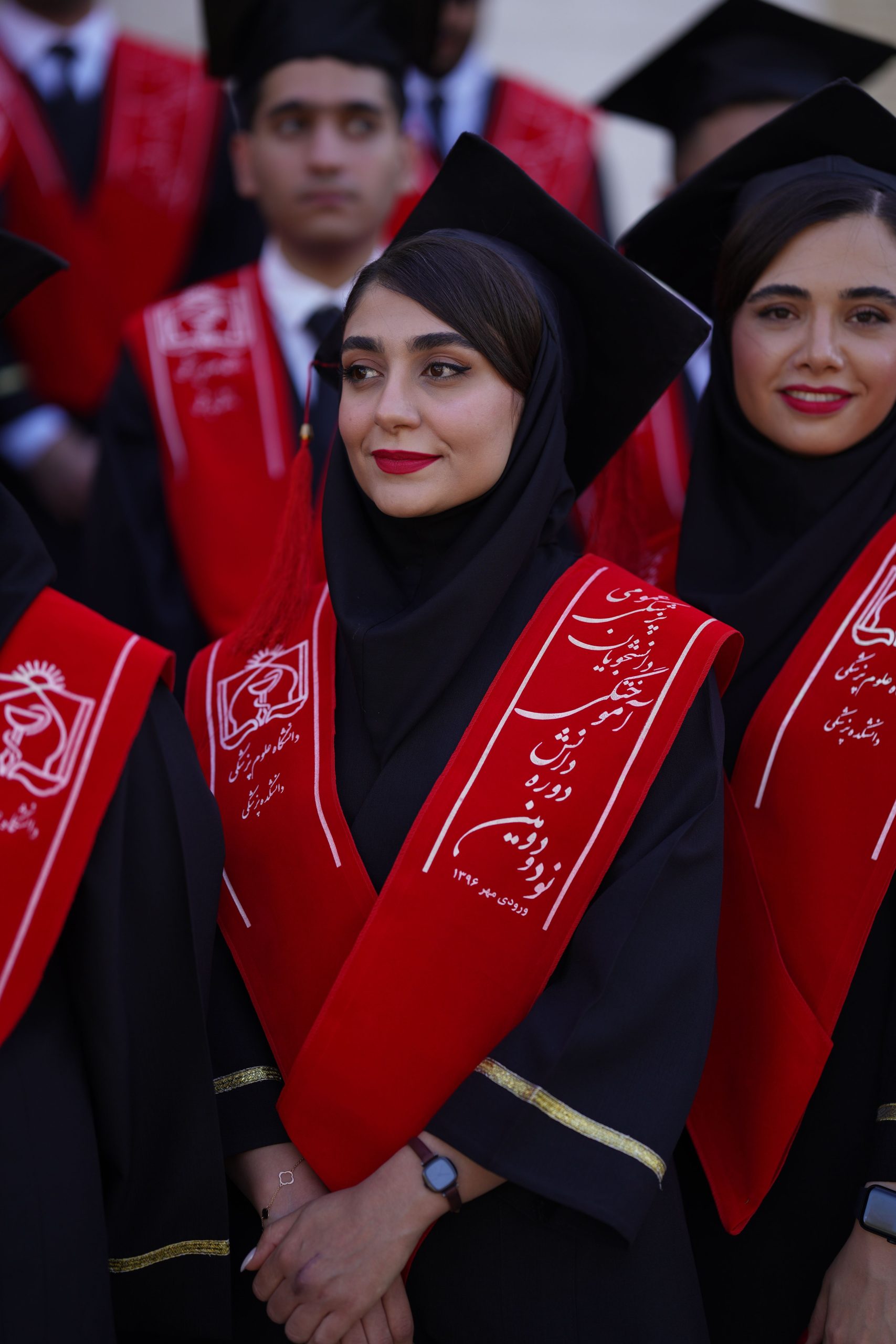
If you have been searching for a way to study in Europe without breaking your head over IELTS, Poland deserves a serious look. For the 2026/2027 academic session, Polish universities and the Polish government are still running one of the most realistic routes into Europe for students who don’t have an IELTS score sitting in their file. You don’t need to panic if you never sat for the exam or if your result expired. Poland has built a system that lets you prove your English another way, and it pairs that flexibility with scholarships that cover tuition, feeding, and even flight costs in some cases.
This guide walks you through everything, from how the no-IELTS process actually works, to the scholarships worth your time, the universities that will take you without a test score, and the exact steps to get your application in before the deadlines close. We checked directly with NAWA, the universities, and the EU’s own portals to make sure the numbers here are current, not recycled from an old blog post.
Do Polish Universities Really Skip IELTS
Yes, and it’s not a loophole, it’s actual policy at many schools. Polish admissions offices know that IELTS costs money and isn’t always accessible, especially if you’re not near a testing centre or you sat your whole secondary and undergraduate education in English already. So instead of forcing everyone through the same exam, a good number of Polish universities will accept:
- A letter from your previous school confirming your degree was taught fully in English
- An online interview with an admissions officer, where they just listen to you speak and ask you questions about your study plans
- Alternative certificates like TOEFL, PTE, Duolingo English Test, or Cambridge exams, depending on the faculty
The catch is that this isn’t a blanket, university-wide rule. It depends on the faculty and sometimes even the specific programme within that faculty. A business programme at Poznań, for instance, might still want IELTS, TOEFL, CAE, or FCE, while an engineering programme at the same school waives it entirely for candidates coming from an English-medium background. So before you get excited, go check the admission page for your exact course, not just the university’s general page.
Also read up on – Studying in Spain Without IELTS: Top Scholarships for International Students in 2026-2027
Why Poland Is Worth Considering If You Don’t Have IELTS
Beyond the IELTS flexibility, Poland gives you real value for what you’re putting in. School fees at public universities for English-taught programmes typically fall between €2,000 and €4,000 a year for the ones that charge international students, and that’s before any scholarship touches it. Living costs are lower than in Germany, France, or the UK, you can comfortably survive on €400 to €600 a month outside the biggest cities. Poland is also part of the Schengen Area, so once you’re in, moving around Europe for holidays or research trips becomes a lot easier. And because so many programmes run entirely in English, you’re not forced to learn Polish just to survive your first semester, though picking up some Polish will obviously help you settle faster.
Poland isn’t the only country doing this either. Germany runs a similar no-IELTS pathway for well-prepared applicants, and so does Norway, so if Poland doesn’t work out for your course, those are worth checking too.
There’s also the safety and infrastructure angle, which a lot of guides skip. Poland has been steadily building out dedicated support for international students, most cities with a big university now have an international student office that helps with residence permits, health insurance registration, and even finding accommodation before you land. Crime rates in Polish university towns are generally low compared to bigger Western European capitals, and the cost of a residence permit renewal or a health card is nowhere near what you’d pay in the UK. None of this replaces doing your own research on your specific city, but it does mean you’re not walking into total unknown territory once your scholarship comes through.
Full Scholarships You Can Apply for in Poland 2026/2027
#1 The Stefan Banach NAWA Programme
Nigerians should look at this one first. NAWA runs it with Poland’s Ministry of Foreign Affairs, and Nigeria is one of the 36 eligible countries for 2026/27. It funds full Master’s study in Polish or English at public universities, fully funded, not a partial waiver.
Eligibility highlights:
- Citizenship of one of the 36 eligible countries, Nigeria included
- A completed Bachelor’s degree, or graduation by mid-July 2026
- No Master’s degree already held
- B2-level English or Polish, shown via certificate or school letter
Application window: Closes 8 May 2026, 3pm CET, but NAWA runs a quota per country group, so a group can fill up early.
Visit to Apply for the Banach NAWA Programme – nawa.gov.pl/en/students/foreign-students/the-banach-scholarship-programme
#2 Erasmus+ and Erasmus Mundus Scholarships
Erasmus+ is the EU’s big education fund, and Polish schools sit in it as hosts and partners. The part worth chasing is Erasmus Mundus, which pays for Joint Master’s Degrees run across two or more European universities, open to anyone worldwide, not just EU citizens.
Eligibility highlights:
- A relevant Bachelor’s degree or equivalent
- Language proficiency matching the programme’s teaching language
- Academic transcripts and a motivation letter
- No nationality restriction, EU or non-EU applicants both qualify
Application window: Most joint programmes open between October and January for an autumn start. Every consortium sets its own date, so check the specific programme’s page.
Visit to Apply for Erasmus+ in Poland – erasmus-plus.ec.europa.eu/opportunities/possibilities-by-country/en_poland
#3 University-Specific Scholarships
Beyond national schemes, individual Polish schools run their own pots of money, and fewer applicants chase these because fewer know they exist. Warsaw University of Technology and Jagiellonian University both run merit- and need-based schemes, with funding size set by each school, not the government.
Eligibility highlights:
- A strong academic record, GPA cut-offs vary by school
- Admission or enrollment already secured at the offering university
- Need documentation for some schemes, pure merit for others
- International student status, conditions vary by school
Application window: Each university runs its own calendar, opening a few months before the autumn intake, so check your target school’s scholarships page directly.
#4 Visegrad Fund Scholarships
Heads up, this won’t work if you’re applying from Nigeria, it’s a regional fund. It covers the Visegrad Group (Czechia, Hungary, Poland, Slovakia) plus the Western Balkans and Eastern Partnership countries like Ukraine, funding Master’s and post-Master’s study for up to two semesters at institutions across the region.
Eligibility highlights:
- Citizenship or residence must differ from the host country
- At least 150km between your base and the host institution
- Open only to V4, Western Balkans, and Eastern Partnership citizens
- A completed Bachelor’s degree for Master’s-level applicants
Application window: Opens January, closes mid-April, results out roughly 45 working days later.
Visit to Apply for Visegrad Fund Scholarships – visegradfund.org/apply/mobilities/visegrad-scholarships/
#5 Poland My First Choice NAWA Programme
This one’s built for students picking Poland as their top destination, not a backup plan, and it covers 44 eligible countries, including much of the EU, plus the UK, US, Canada, Australia, and several Asian and Latin American countries.
Eligibility highlights:
- Citizenship of an eligible country, Polish and dual-Polish citizens don’t qualify
- Finishing or recently graduated from a Bachelor’s degree
- B2-level Polish or English, depending on your programme’s teaching language
- Independent university admission secured alongside the NAWA application
Application window: Opens in spring, deadlines historically fall between mid-April and late May, results out by early summer.
Visit to Apply for Poland My First Choice – nawa.gov.pl/en/students/foreign-students/poland-my-first-choice-programme
#6 The Gen. Anders Programme
This one is heritage-based, so it only works if you have documented Polish roots. It’s built for diaspora students wanting to study Bachelor’s or Master’s in Poland while reconnecting with family heritage, not the general applicant pool.
Eligibility highlights:
- Documented Polish origin, a Karta Polaka, Polish citizenship proof, or ancestry through a parent or grandparent
- Secondary education completed outside Poland
- Open at both Bachelor’s and Master’s level, with separate calls for each
- Admission at a university under Poland’s Ministry of Science, Health, or Culture
Application window: Separate Bachelor’s and Master’s calls run in spring, both active at once in 2026.
Visit to Apply for the Gen. Anders Programme – nawa.gov.pl/en/students/foreign-students/the-gen-anders-programme
#7 The Konstanty Kalinowski Scholarship Program
This is a solidarity scholarship for Belarusian citizens who can’t continue studying in Belarus because of political persecution. Running since 2006 through the University of Warsaw’s Centre for East European Studies, it’s Europe’s largest programme of its kind, with support running up to five years while you stay in Poland.
Eligibility highlights:
- Belarusian citizenship plus evidence of persecution, expulsion or arrest records, or pro-democracy involvement
- Open at Bachelor’s, Master’s, PhD level, plus research internships
- No Polish language requirement at application, support comes after admission
- Accommodation, living costs, health insurance, and visa costs covered
Application window: Runs annually through the Programme Office, though recruitment has stretched longer in years of heightened need.
Visit to Apply for the Konstanty Kalinowski Program – studium.uw.edu.pl/
#8 The CEEPUS Programme
CEEPUS isn’t a typical scholarship, it’s a regional mobility scheme running since the mid-1990s across 16 Central and Southeastern European countries, coordinated on Poland’s side through NAWA. It funds exchanges, short stays, summer schools, and research visits, bringing roughly 300 foreign students through Poland every year.
Eligibility highlights:
- Enrollment at an accredited CEEPUS member institution
- At least two completed semesters before applying
- Apply through your home institution’s network, or as a Freemover
- No funding to study in your own home country
Application window: Annual network cycle, individual mobility applications due once networks are confirmed.
Visit to Apply for CEEPUS in Poland – nawa.gov.pl/en/scientists/ceepus
#9 The Ulam NAWA Programme
Skip this if you’re still on your first degree, it’s for postdoctoral researchers who already hold a PhD. It invites you to a Polish institution for 6 to 24 months of research, and the host institution applies on your behalf, not you.
Eligibility highlights:
- At least a doctoral degree already earned
- No more than 3 months in Poland in the past 3 years
- Open to every nationality and field, with a Polish host institution required to invite you
- Up to PLN 17,000 a month, plus a mobility allowance
Application window: Closed 15 May 2026, results expected 30 November 2026.
Visit to Apply for the Ulam NAWA Programme – nawa.gov.pl/en/scientists/the-ulam-programme
#10 University of Warsaw Internal Scholarships
Poland’s top-ranked school doesn’t run one blanket scholarship, it runs several, each with its own conditions. The Rector’s Scholarship rewards a high GPA or a strong achievement, while Scholarship to Start pays newly admitted top students within 30 days of being granted.
Eligibility highlights:
- A high GPA, or an Olympiad, sport, or arts achievement for the Rector’s Scholarship
- New top student or PhD candidate status for Scholarship to Start
- Documented need for the Social Scholarship, tied to a Pole’s Card or EU citizenship
- A disability certificate, reapplied for yearly
Application window: Deadlines shift by type, the Rector’s Scholarship has historically closed around mid-October, others run for months or until funding runs out.
Visit to Apply for University of Warsaw Scholarships – welcome.uw.edu.pl/scholarship-for-international-students-of-the-university-of-warsaw/
Taken together, these ten routes cover almost every stage of study, from your first degree all the way to postdoctoral research, and every one of them leaves room for candidates without an IELTS score. Just pay close attention to which ones are actually open to Nigerians, Visegrad and Gen. Anders won’t apply to most readers here, but the rest are fair game.
What You Actually Need to Qualify Without IELTS
Every scholarship above has its own fine print, but a few things come up again and again across nearly all of them.
- A certificate or letter proving your previous education was conducted in English, this is the single biggest substitute for IELTS
- A strong academic transcript, since Poland weighs your GPA heavily when IELTS isn’t in the picture
- A well-written statement of purpose and, where required, recommendation letters
- A valid international passport, ready well ahead of time
- Willingness to sit an online interview if the university asks for one instead of a test score
None of these are exotic requirements. Most Nigerian graduates already have transcripts and reference letters sitting somewhere, so the real work is getting the English-medium confirmation letter from your old school and making sure your statement of purpose actually speaks to the specific programme you’re applying to, not a generic copy-paste version.
One thing worth flagging for Nigerian applicants specifically, since your secondary and undergraduate education was almost certainly delivered fully in English, you’re actually in a stronger position on the no-IELTS front than applicants from non-English-speaking countries. Your WAEC or NECO English result, combined with a letter from your university confirming your degree programme was taught in English, usually satisfies the medium-of-instruction requirement most Polish schools ask for. Just make sure the letter is on official letterhead, signed by the right academic office, and, where possible, notarised or stamped, since some universities want that extra layer of authentication before they’ll accept it in place of a language test.
10 Polish Universities That Will Take You Without IELTS
University of Warsaw is the country’s biggest and highest-ranked school, founded in 1816, running English-taught programmes across nearly every discipline, and it accepts medium-of-instruction letters in place of IELTS for many of them.
Jagiellonian University in Kraków is Poland’s oldest, dating back to 1364, and it’s especially strong in medicine, law, and the humanities, with several English-taught courses open to alternative proof of English.
Warsaw University of Technology is the country’s largest technical school, and it reviews interviews or prior English-medium schooling as a stand-in for IELTS, though this is decided programme by programme.
Adam Mickiewicz University in Poznań is one of Poland’s biggest schools, particularly known for humanities and social sciences, and English-medium prior education can get your IELTS requirement waived depending on the course.
University of Wrocław, one of the oldest in the country, runs English-taught law, science, and humanities programmes and generally accepts a medium-of-instruction certificate over IELTS.
AGH University of Science and Technology in Kraków is known for mining, materials science, and engineering, and assesses IELTS alternatives on a case-by-case basis per programme.
Poznań University of Economics and Business holds international accreditations like AMBA, but heads up, not every programme here waives the test, some still want IELTS, TOEFL, CAE, or FCE, so check your specific course’s language policy before assuming.
Gdańsk University of Technology, founded in 1904, generally accepts prior English-medium education instead of IELTS across its engineering programmes.
Lodz University of Technology takes interviews or medium-of-instruction letters as substitutes, again depending on the faculty you’re applying into.
University of Łódź offers a wide spread of English-taught courses in social sciences and humanities, with IELTS waivers available for applicants with the right prior education background.
Step-by-Step, How to Apply Without IELTS
- Confirm your specific programme’s language policy first. Don’t assume a rule that works for one faculty applies to the whole university, email the international office if the website isn’t clear enough.
- Gather your English proficiency alternative. This is usually a medium-of-instruction letter from your previous school, and sometimes your transcripts alone will do if they clearly show an English-taught degree.
- Prepare for a possible interview. Some schools will want to hear you speak directly, especially if your documentation doesn’t fully satisfy them on its own.
- Put your full application package together early. Transcripts, statement of purpose, and recommendation letters take the longest to gather, especially reference letters, so start this months before any deadline, not weeks.
- Apply for scholarships alongside your admission, not after. Many of the programmes above, NAWA’s schemes especially, want you already admitted or applying at the same time, and waiting for an admission letter before you touch the scholarship application is one of the most common, avoidable mistakes Nigerian applicants make.
Once everything checks out, you’ll get an admission or acceptance letter from the university, and a separate confirmation for whichever scholarship funding you applied for.
One more practical tip before you dive in, keep a simple spreadsheet tracking each university and scholarship you’re applying to, with its own deadline, required documents, and current status. It sounds basic, but once you’re juggling three or four applications at once, each with a different English proficiency policy and a different deadline, it’s easy to miss a quota closing early or forget a document a particular faculty asked for that another one didn’t. A five-minute tracker saves you from losing a spot over something as small as a missing signature.
Poland genuinely gives you a workable, IELTS-free path into a European degree, but the flexibility only helps you if you move fast on the deadlines and confirm the actual policy for your specific course rather than relying on assumptions. Start with the scholarship that fits your current stage, whether that’s Banach for a Master’s or Ulam if you’re already holding a PhD, and build your application timeline backward from there. The paperwork might feel like a lot right now, but thousands of students from countries just like yours have gone through this same process and made it to Poland, there’s no reason you can’t be next.
Frequently Asked Questions About Studying in Poland Without IELTS
Do Polish universities really admit students without IELTS?
Yes, it’s actual policy at many schools, not a loophole. Admissions offices accept alternatives like a medium-of-instruction letter, an online interview, or certificates such as TOEFL, PTE, or Duolingo, depending on the faculty and specific programme you’re applying to for admission.
What can Nigerian students use instead of IELTS for Polish universities?
A letter from your Nigerian school confirming your degree was taught fully in English usually works best. Your WAEC or NECO English result, combined with that confirmation letter on official letterhead, typically satisfies the medium-of-instruction requirement most Polish schools ask for.
Which scholarship should Nigerian students apply for first?
The Stefan Banach NAWA Programme is the strongest starting point. Nigeria is one of 36 eligible countries for 2026/27, and it fully funds Master’s study in English or Polish at public universities, closing 8 May 2026, though quotas can fill up early.
How much does it cost to study in Poland as an international student?
Public university fees for English-taught programmes typically run between €2,000 and €4,000 a year before any scholarship applies. Living costs are lower than in the UK or Germany, and you can comfortably survive on €400 to €600 a month outside major cities.
Can Nigerian students apply for the Visegrad Fund or Gen. Anders Programme?
No, both are restricted. Visegrad only covers citizens of the V4 region, Western Balkans, and Eastern Partnership countries, while Gen. Anders requires documented Polish heritage. Neither applies to the general Nigerian applicant, so focus on NAWA’s other open schemes instead.
Do all faculties at a Polish university waive the IELTS requirement?
No, it depends on the faculty and sometimes the specific programme within it. A business course might still require IELTS, TOEFL, CAE, or FCE, while an engineering course at the same school waives it entirely, so always check your exact course’s admission page.
Should Nigerian applicants apply for admission or the scholarship first?
Apply for both at the same time, not one after the other. Many NAWA schemes want you already admitted or applying alongside your scholarship application, and waiting for an admission letter first is one of the most common, avoidable mistakes Nigerian applicants make.
Which Polish universities commonly accept students without an IELTS score?
University of Warsaw, Jagiellonian University, Warsaw University of Technology, Adam Mickiewicz University, and University of Wrocław are among schools that generally accept medium-of-instruction letters. Acceptance still varies by faculty, so confirm the exact policy for your chosen programme before applying.
What documents do I need to prepare for a no-IELTS Polish application?
You’ll typically need a medium-of-instruction letter, strong academic transcripts, a statement of purpose, recommendation letters, and a valid international passport. Some schools may also require an online interview if your documentation alone doesn’t fully satisfy their English proficiency requirement upfront.
Is the Ulam NAWA Programme open to Nigerian Master’s graduates?
No, it’s strictly for postdoctoral researchers who already hold a PhD, funding 6 to 24 months of research in Poland. If you’re still completing your first degree, this programme isn’t for you, look instead at Banach or Poland My First Choice.
What happens after I submit my Polish university and scholarship applications?
You’ll receive an admission or acceptance letter from the university, plus a separate confirmation for the scholarship funding. Tracking deadlines with a simple spreadsheet helps, since juggling multiple applications with different English policies and dates makes it easy to miss something.