
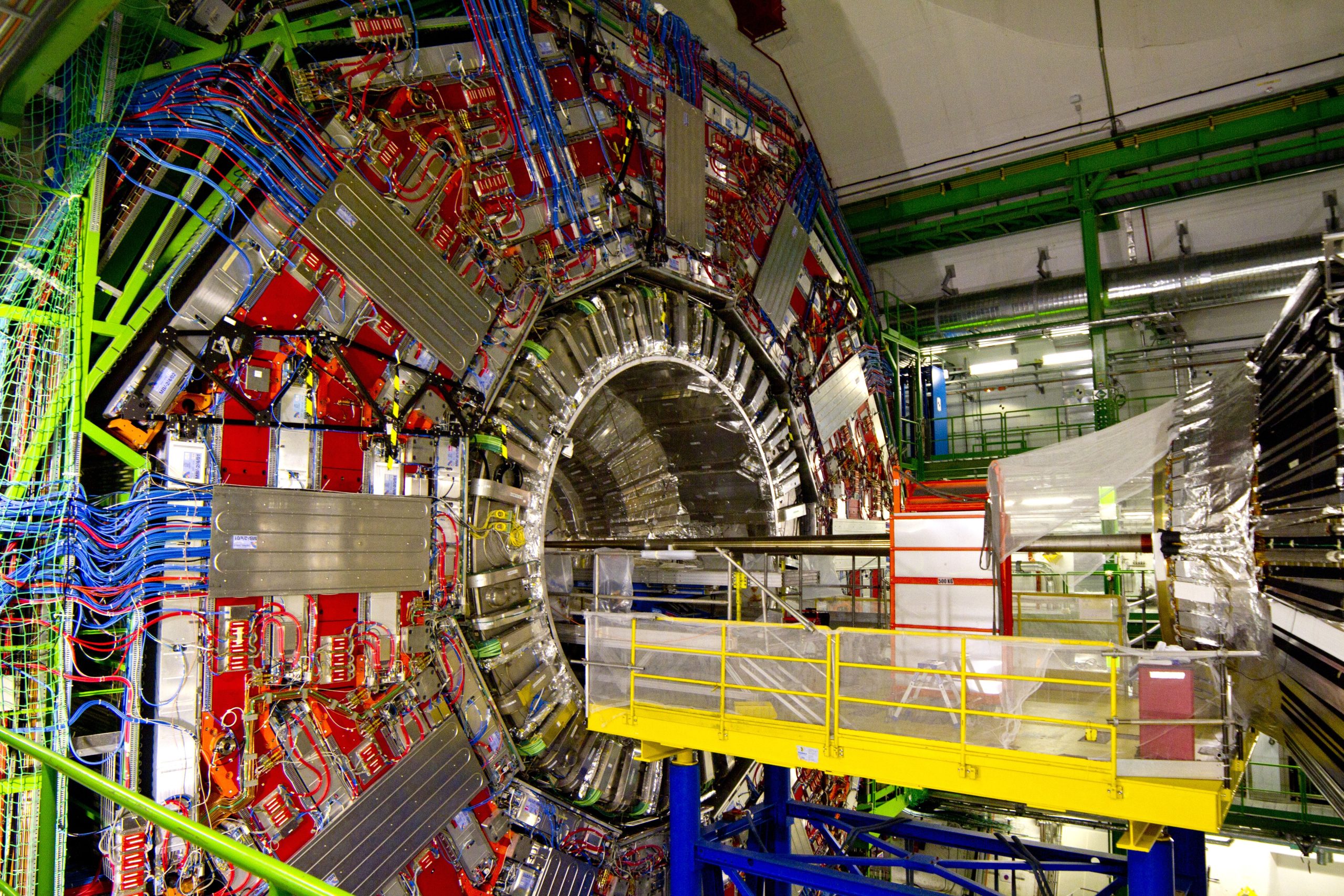
If you have ever dreamed of working somewhere that pushes the very edge of human knowledge, CERN belongs at the top of your list. The European Organization for Nuclear Research, based just outside Geneva, Switzerland, runs the Large Hadron Collider and a whole ecosystem of programmes built specifically to bring young engineers, physicists, computer scientists, and administrators into its fold. The good news for readers of fundedabroad.com is that several of these programmes are open right now, with deadlines stretching from October 2026 through the end of the year, and start dates lined up for early to mid 2027.
This guide breaks down every relevant pathway into CERN, whether you are still studying, freshly graduated, or a technician without a university degree. We will walk through eligibility, stipends, deadlines, and the actual application links, then close with answers to the questions people ask most often.
Considering other fully funded routes in Switzerland too? You may also want to check the Swiss Government Excellence Scholarships 2027/2028, a fully funded scholarship for international students.
Why CERN Is Worth the Effort
CERN is not just a laboratory. It is a genuinely global institution with over 17,000 scientists and engineers connected to its research programmes, and it operates the Large Hadron Collider, the largest and most powerful particle accelerator ever built. Working there, even for a few months, puts a name on your CV that recruiters everywhere recognize instantly. Beyond the prestige, CERN pays real stipends, covers health insurance, and in many cases contributes toward travel and relocation costs. For engineers and computer scientists in particular, the technical exposure is hard to match anywhere else: you would be working alongside people building detectors, cooling systems, control software, and data pipelines that keep an entire accelerator complex running.
CERN Opportunities at a Glance
| Programme | Who Can Apply | Duration | Monthly Allowance (approx.) | Next Deadline | Ideal Start |
|---|---|---|---|---|---|
| Technical Studentship | Bachelor’s or Master’s students, minimum 18 months of study completed | 4 to 12 months | Up to CHF 3,486 | 16 October 2026 | April 2027 |
| Summer Student Programme | Undergraduates with 3+ years completed, or Master’s students | 8 to 13 weeks | Around CHF 90 per day | Typically closes late January 2027 | June to August 2027 |
| Doctoral Student Programme | Enrolled PhD students or candidates about to start a PhD | 6 to 36 months | Roughly CHF 3,900 (Non-Member State track) | Rolling, check current postings | Late 2026 to March 2027 |
| Early Career Professionals – University Graduates (Origin) | Bachelor’s or Master’s degree holders, maximum 2 years post-graduation experience | 6 to 24 months, extendable to 36 | CHF 5,266 or CHF 5,793, depending on degree | Rolling, per open position | Varies by role |
| Early Career Professionals – Technical Field | Secondary diploma or non-university qualification only, no bachelor’s degree | 24 months, extendable to 36 | CHF 4,687 | 31 December 2026 | 1 March 2027 |
Now, let us look at each of these in more depth, because the fine print genuinely matters here.
Technical Studentship: For Students Still Enrolled
The Technical Studentship is CERN’s flagship internship for undergraduates and Master’s students who are looking for practical training in fields such as applied physics, electrical and electronics engineering, mechanical engineering, civil engineering, IT, mathematics, or robotics. To qualify, you need to have completed at least eighteen months, or three semesters, of study in your field, and you must remain a full-time student throughout your placement since you keep your health insurance coverage through CERN’s scheme while enrolled, along with a family supplement to your allowance where it applies and travel expenses to Geneva depending on your circumstances. PhD students and PhD holders do not qualify for this particular route.
Selection happens twice a year, in panels that meet in December and May, and CERN typically brings in around 120 students per round. The upcoming round for a 2027 start closes on 16 October 2026, with the allowance sitting at roughly CHF 3,486 per month, net of tax. You will find the live openings and application portal under the Technical Studentship section at careers.cern, listed separately by discipline, so search for the specific field you studied rather than a generic listing.
🔗 Official Application Link: CERN Technical Studentship Programme
Summer Student Programme: The Fastest Way In
If your schedule cannot stretch to several months abroad, the Summer Student Programme is a shorter, more accessible entry point. It runs for eight to thirteen weeks each summer and combines hands-on project work with a full lecture series taught by CERN’s own physicists and engineers. What makes this one especially valuable for readers outside Europe is that candidates of every nationality are welcome to apply, unlike many CERN roles that restrict eligibility to Member and Associate Member States. You need at least three completed years of undergraduate study, or Master’s-level enrolment, plus a solid grasp of English. Applications typically open in November and close in late January, with the programme running through June, July, and August. The stipend sits around CHF 90 a day, covering accommodation and meals in the Geneva area, and CERN also helps with campus housing.
🔗 Official Application Link: CERN Summer Student Programme
Open to every nationality, much like this route? You may also want to check the Monash University PhD Scholarship 2026 in privacy-preserving AI for video analytics, a fully funded STEM research route.
Doctoral Student Programme: For PhD Candidates
For those pursuing doctoral research, CERN offers placements lasting anywhere from six months to a full three years, letting you work on your thesis inside one of the world’s leading physics facilities. Nationals of CERN Member and Associate Member States apply through the standard Doctoral Student Programme, while a separate Non-Member State track exists for everyone else, currently offering a contract of one year with an allowance of CHF 3,907 monthly and a start window between late 2026 and March 2027. Because this route depends heavily on matching a specific thesis project with a CERN supervisor, it is worth reaching out to your university’s international office or your intended supervisor early, well before any stated deadline.
🔗 Official Application Link: CERN Doctoral Student Programme
Weighing other fully funded doctoral and postgraduate routes too? You may also want to check the Gates Cambridge Scholarship 2027/28, one of the most prestigious fully funded postgraduate routes available.
Early Career Professionals: The Graduate Route (Origin Programme)
This is the pathway most relevant to anyone who already holds a Bachelor’s or Master’s degree, like recent engineering graduates. Branded internally as the Origin Programme, it is aimed squarely at recent university graduates with no more than two years of professional experience since graduation, and it covers an enormous range of fields, including electrical engineering, electronics engineering, data science, civil engineering, mechanical engineering, and information technology. The pay depends on your degree level, sitting at either CHF 5,266 or CHF 5,793 net per month, and contracts run six to twenty four months, with room to extend up to thirty six.
Here is the part many applicants miss: this programme does not work off one universal deadline. Instead, CERN posts individual graduate vacancies throughout the year under specific job codes, each with its own closing date, so the smart approach is to check the Entry-Level University Graduates page on careers.cern regularly and set up an alert for your field, rather than waiting for a single application window.
🔗 Official Application Link: CERN Origin Programme – Entry-Level University Graduates
Also weighing well-known funded scholarships for engineering and STEM graduates? You may also want to check the Imperial College London Scholarships 2027, worth up to $15,000 a year for international students.
Early Career Professionals: The Technical Field Route
This programme sounds similar to the one above but serves a completely different audience. It is built for people whose highest qualification is a secondary school diploma or a shorter non-university qualification, capped at two years of relevant experience. Anyone holding a Bachelor’s, Master’s, or PhD is explicitly excluded from this specific track, even though the work itself spans applied physics, engineering, and computing. The current spontaneous applications pool, listed under reference ECP-Tech-2026-2, closes on 31 December 2026, targets a start date of 1 March 2027, runs for 24 months with extension potential to 36, and pays a net stipend of CHF 4,687 monthly, alongside 30 days of annual leave and a possible relocation package.
🔗 Official Application Link: CERN Origin Programme – Entry-Level Technical Field
Who Can Actually Apply: The Nationality Rules
Most CERN staff and graduate positions, including both Early Career Professionals tracks and the Doctoral Programme, require you to hold citizenship from a CERN Member State or Associate Member State. That list includes most of Western and Central Europe, alongside associate members such as India, Pakistan, and several others, though quotas occasionally close for specific nationalities once a yearly ceiling is reached. The Summer Student Programme is the clear exception here, since it welcomes applicants from anywhere in the world, which makes it a genuinely strategic first step for students from countries without Member State status who still want CERN experience on their record before pursuing other routes later.
How to Build a Competitive Application
A strong CERN application rests on four things: a clean, specific CV in English or French, a motivation letter that names an actual project or division you want to work in, an academic transcript, and, where required, a reference letter from a lecturer or previous supervisor. Do not send a generic cover letter written for a random internship; CERN reviewers see thousands of these every cycle and can tell within seconds when someone has not researched a specific opening. Mention the exact reference code of the position, tie your coursework or final year project to a real CERN activity, such as detector electronics or accelerator control software, and keep your English tight and error free.
Life at CERN: What to Expect Once You Arrive
CERN sits right on the border between France and Switzerland, so most interns end up living in nearby towns such as Meyrin, Saint-Genis-Pouilly, or Ferney-Voltaire, all a short bus ride from the site. The campus itself runs more than forty clubs, from hiking to astronomy, and the surrounding region gives you the Alps on one side and Lake Geneva on the other. Housing is not guaranteed, so budget time to search early, and factor in Switzerland’s cost of living, which sits noticeably higher than most of Africa, Asia, or Eastern Europe.
Final Thoughts
CERN offers one of the most well-structured entry points into international science and engineering careers that currently exists, and unlike many private sector internships abroad, its stipends and benefits are transparent and standardized. Whichever track fits your current stage, whether that is the Summer Student Programme while you are still studying, a Technical Studentship for hands-on training, or the Origin Programme once you hold your degree, the process rewards preparation far more than luck. Start early, match your application to the specific opening, and treat the deadline dates in this guide as your working calendar for the next application cycle.
Building out a broader funded-opportunities strategy? You may also want to check the Chevening Scholarship 2027/2028, another well-known fully funded route worth comparing.
Frequently Asked Questions
Do I need to speak French to work at CERN?
No, you do not. English is one of CERN’s two official working languages, alongside French, and most teams operate comfortably in English. CERN even offers language classes once you join, so lacking French should never stop you from applying to any programme listed here.
Can Nigerian citizens apply to CERN internships?
Nigeria is not currently a CERN Member or Associate Member State, which limits eligibility for staff-track programmes. However, the Summer Student Programme accepts applicants of every nationality, making it the most realistic and accessible entry point for Nigerian students right now.
Is CERN funding enough to live on in Geneva?
Switzerland is expensive, and Geneva ranks among its priciest cities. That said, CERN’s stipends are calibrated specifically for the region and generally cover rent, food, and transport comfortably, especially if you share accommodation with other interns nearby.
What happens if I miss the October 2026 Technical Studentship deadline?
CERN reviews Technical Studentship applications twice yearly, in December and May, so a missed October round simply means targeting the following cycle. Keep your documents ready and monitor careers.cern directly for the panels that meet in December and May, since exact dates shift slightly from year to year.
Can I apply to more than one CERN programme at once?
Yes, provided you genuinely meet each programme’s separate eligibility rules, since qualification level and experience caps differ sharply between tracks. Many candidates apply to the Technical Studentship and, once they graduate, later apply to the Origin Programme.
Does CERN help with visas and relocation?
CERN assists with the necessary visa and work permit paperwork once you accept an offer, though requirements depend on your nationality and contract length. Certain programmes also include installation grants or travel allowances, detailed individually on each job listing.
Want this saved as a downloadable Word or Markdown file for your editing workflow?